Life Mentor for High-functioning / High-masking ND Adults
To help neurodivergent adults embrace their new life
Your brain isn’t broken. You’re exhausted from trying to perform normal all the time.I learned this recently at the age of 36.And now I want to help other ADHD / AuDHD / Autistic adults embrace this awareness.Are you a ADHD and / or Autistic adult and have faced these issues with yourself?:-> Slowed or broken productivity. You don't wanna give up to your emotional and mental paralysis, but you also don't know what will help you move forward?-> Life at home and the home itself is a mess. You know you want structure in life, but you keep failing and you don't know how to protect that daily structure from your own overwhelm?-> You have goals and projects. But they are floating in a pool of shame and personal guilt. You know you can finish each of these individually, but bringing them all together deflates your confidence and adds to anxiety and overwhelm?
I'm Navin Israni. I help ADHD / AuDHD / Autistic adults to help them get unstuck and find accommodations that work for them through an educational approach.Have questions?Read more about me below. Feel free to email me or book an intro call from my "Enroll With Me" section.
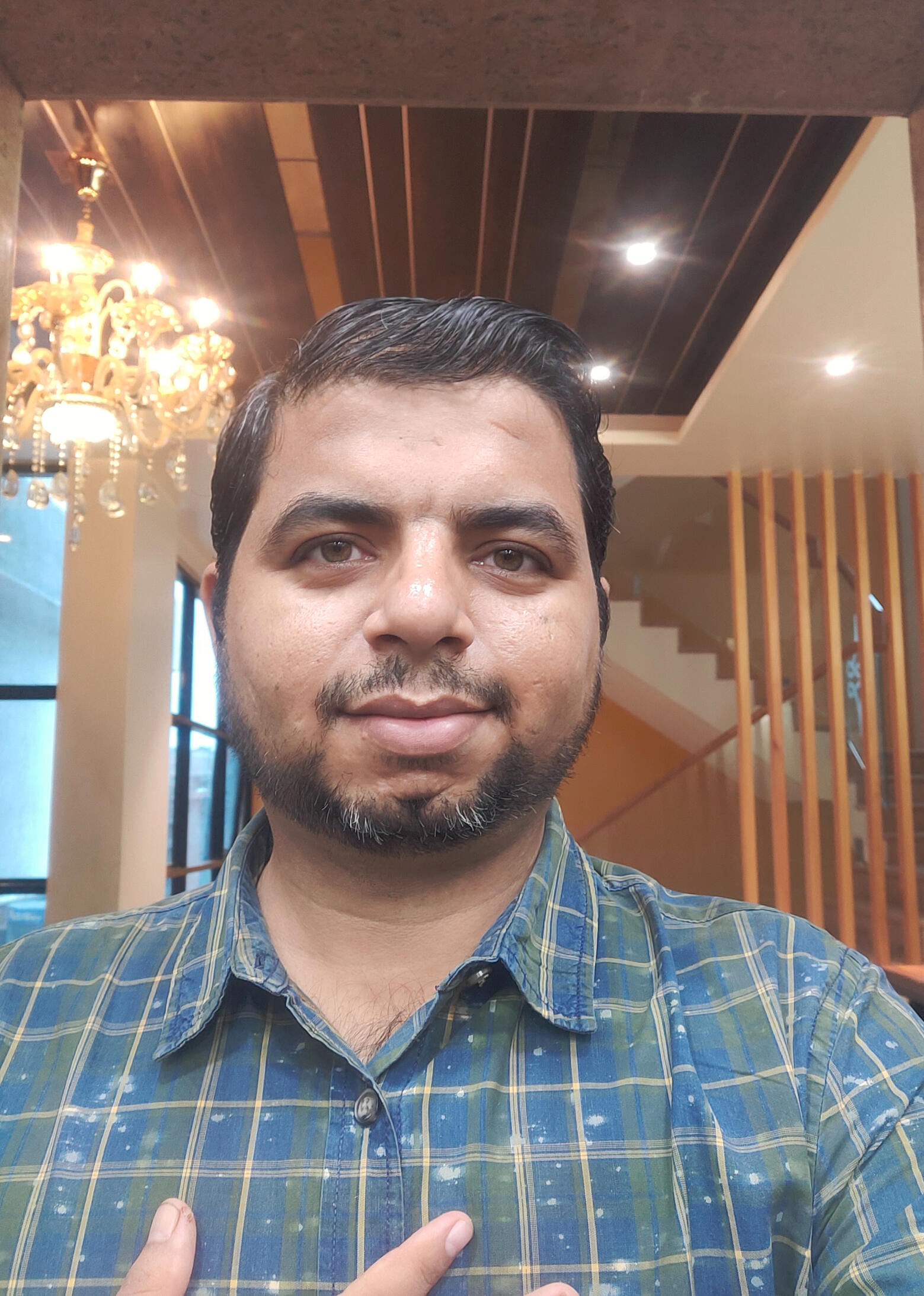
A little bit about me
I am 36 years old (as of writing this) and with age comes life experience, self awareness, emotional maturity, and a tiny bit of self compassion.I have spent last 12 years alone. At 24, I lost my mom to cancer and at 29, my retired father lost his life to transient ischemic attacks (or as doctors called it "mini brain strokes" over an extended period of time"). Slowly, I also lost my relationship with my older brother (another painful reason I don't wanna get into).But then it's not all been bad. In these last 12 years, I also:- gradually overcame severe burnout (10 months in 2024)- cultivated professional and personal relationships, made friends across India and a few in Nigeria, and found great professional colleagues in the US and Europe- managed to stabilize my work CV, earned remote jobs and contracts across the globe, and settled into working remotely working alone from home.- learned to manage my schedule working alone from from home and improved my productivity by at least 50%- learned to cope with and improve my chronic back pain symptoms, nervous system dysregulation, and and few other health issues.- found the right psychiatrist and combo of meds (after years of bad psychiatric advice and ineffective meds), and- learned to effectively juggle managing the house, my career, my food, and my social life- fostered self acceptance and self compassion in myself- and managed to build a life that I don't wanna escape!Today, I do have some support but I am still doing 80% of my life by myself.My first diagnosis was severe Anxiety and Dysthymia back in Q4 of 2018.I got diagnosed with adult Autism at the age of 30 (amidst the pandemic) and with ADHD in 2024.I am not perfect. But I am 36% better than where I was at the time of my first diagnosis. And getting 1% better with each passing birthday!
Why I chose to become a 1:1 mentor, not a AuDHD creator on YouTube
I am a writer by profession. I have serious B2B writing chops and a lot of experience in that. I got paid before and I am getting paid now. I don't see anything wrong with having 2 different jobs one you enjoy and one that you like and make money from. I have found and made friends with some amazing people through my marketing and writing career.Coaching is most certainly not a side hustle for me. It brings me IMMENSE JOY. It's also something that doesn't bring me all of my money right now.So until I establish a regular paying clientele who trust me and see results working with me, I keep that my writing and marketing skills on front door of my profile to get work that I enjoy doing, work that I can do well, and work where I can find financial fulfilment.A good first step in having better mental health is finding what energizes you and making a career in that. Training and coaching is that for me. I knew that long ago, took so long to act on it, won't be going back now.All my years in realizing my identity as an AuDHD adult (since my diagnosis) have been a big eye opener.I have learned so much that if I launch my YouTube channel, I wouldn't stop posting for the first whole year; I would create a new video on every day!But I don't want to surrender my knowledge to a soul sucking corporation who is known to delete people's entire careers-worth of their creative work in an instant because their AI told them to. That is risky and I don't have the heart to take that leap.Instead, I want to help other ADHD / Autistic adults in a 1:1 setting to improve their quality of life and achieve their goals.
Why ADHD & Autism mentoring?
Having my ADHD and Autism diagnosis forced me to seek help from others like me and integrate into global communities of others with ADHD and Autism.And that helped me realize the struggle and pain we all go through.I saw some interview where they said some 80% people in jail are ADHD or Autistic.I want to help get them get back to living a life and being functional in society.I want to help other ADHD and/or Autistic people live better lives, adopt better habits, and have better relationships.After my diagnosis, I found was most of the advice on social media about ADHD / Autism productivity is made digestible for neurotypicals, or is packaged to look sexy social media virality.Remember those pretty Venn diagrams and grids and lists and tools?That advice looks practical until you reach your first point of failure with it.Everyone teaches you what to do and how to exactly do it, but no one teaches you to get back up again after you fail.You feel like singing: I tried so hard, and got so far, but in the need, it doesn't even matter!Each of our ADHD / Autism experience is highly subjective. Our lives are different and our challenges are different.We don't need just another hack; there's plenty of those available online.Even just implementing those alongside living our usual life feels like a project - one that you have tried several times in your lives and you never reached a point of success with it.The real solution to manage your ADHD / Autism is not to build better systems. It lies in the being able to handle failures of your existing system, learning your lessons, and implementing them in your life.The best way to help neurodivergent adults is to be a sounding board, provide suggestions to improve their ideas, and provide consistent professional accountability to achieve their goals.That's where I come in.
Learning and growing post diagnosis as an AuDHD adult: the kernel of my teaching skills
I was previously a software trainer for ~2 years between 2012 and 2017
(1.5 consecutive years, and the rest broken up over 3.5 years).I have always loved learning new things and sharing them with others. I wrote my first courseware textbook in the final year of Bachelors in Computer Engineering, released it before my final exams (May 2011).I was also trainer at a very young age of 22 at Infosys in Pune. I did this teaching job for from July 2012 to December 2013.When I left Infosys, I took up short term training roles at local private education academies and even a freelance training gig in Bangalore which earned me quite well.But behind whatever little money I made, was a dark secret I never told anyone. Every day I went to work as a software trainer felt like a waste of time and energy. Basically, I had no career goals in software and no inner motivation to become a software engineer.So I quit that career and built my career brick by brick as a writer and now as a marketer.But I became a teacher because I have always loved and will always love to keep learning and sharing my knowledge with others.Despite this transition, I never stopped being a teacher! (you should see how I write!)Then, after my diagnosis 6 years ago, I spent a lot of time learning about how to unmask, to understand first my Autism and then my ADHD.I was already in therapy since late 2018, when my depression and dysthymia were first diagnosed.Throughout my life so far, I have been through 7 therapists (including 2 who didn't have the bandwidth to take me on as a patient after initial sessions).Out of the remaining 5 therapists,
1) One therapist already worked with Autistic kids so she was already experienced, she used to ask me so many annoying questions but that ultimately taught me how to self reflect.
2) One therapist taught me to verify facts before believing my catastrophizing thoughts. She also taught me to be brave and articulate in my conversations.
3) My very first therapist taught me how to read my emotions by listening to my thoughts.
4) My second therapist taught me the value of being calm in any discussion simply by being himself; he was a calm person by nature.
6) I even worked with a habit coach.
I loved everyone, and I learned from everyone. But I came to a point where I could no longer afford therapy and I seemed to hit a wall regularly in my sessions. So, I decided to stop therapy until I could bring new energy and new thoughts to the table.Alongside my therapists, a lot of my growth came from self training: learning from Dr. Russell Barkley's YouTube lectures & essays and other highly relatable and credible sources such as the world class ADHD experts invited on ADHD Chatter podcast.Maggie Sterling, Brad Fanestil, Emma McAdam (Therapy in a Nutshell), Dr. Tim Fletcher and several other amazing educators have greatly influenced my knowledge and approach.I also spent a lot of time contextualizing and processing my past through this new lens of AuDHD and nervous system awareness.I am pretty confident in my coaching skill. I was trainer before, I know what teaching is, and I come from a teaching family. I'm very proud that teaching is my family business.
Therapy vs Coaching vs Mentoring for ADHD / Autistic adults
Therapy
It helps with emotional and mental health. It focuses on understanding why you're struggling, such as anxiety, trauma, burnout, depression, emotional regulation, or the long-term effects of masking. It may explore past experiences if they're affecting your life today, and it's provided by a licensed mental health professional.
Coaching
It helps with practical goals and daily functioning. It focuses on what to do next, such as managing time, building routines, improving organization, staying accountable, and creating systems that work for your brain. Coaching is mainly present- and future-focused and is provided by a trained coach, though training requirements vary by country.
ADHD Adults
Therapy: Managing emotional dysregulation, rejection sensitivity, low self-esteem, anxiety, depression, grief from late diagnosis.Coaching: Time management, prioritization, breaking down tasks, creating routines, accountability, workplace strategies.
Autistic Adults
Therapy: Managing anxiety, autistic burnout, sensory overwhelm, masking, identity, relationships, trauma.Coaching: Energy management, sensory planning, communication strategies, work accommodations, daily living skills, planning around executive function.
AuDHD Adults
Therapy helps someone process years of masking and recover from burnout.Coaching helps them build a weekly schedule that actually works with their brain instead of against it.A simple way to remember it:Therapy asks: "What's making this difficult, and how can we help you heal?"Coaching asks: "Given how your brain works, what's the best way to get this done?"
Difference between coaching & mentoring
A mentor shares wisdom from their own experience. They've usually walked a similar path and help you avoid mistakes, make better decisions, and see possibilities you may not have considered. The relationship is less structured and often evolves over months or years.A coach doesn't need to have lived your exact experience. Their role is to help you identify goals, build systems, develop skills, and stay accountable. Coaching is more structured, with regular sessions focused on measurable progress.For an ADHD or autistic adult, the difference becomes clearer in practice:A mentor might say, "When I was navigating work with ADHD, this approach helped me manage meetings and deadlines. You could try something similar."A coach might say, "Let's figure out why meetings drain you, then design a note-taking system and a follow-up routine that fits how your brain works."In short:Therapist: Helps you heal and improve mental health.
Coach: Helps you perform better and build effective habits.
Mentor: Helps you benefit from someone else's experience and judgment.
Here's what YOU will do if you decide to work with me as your Mentor
We all have an inner saboteur in our heads - the dreaded ADHD internal critic!How do you retrain it to go the other way in its judgement of us?How do we train it to see the good in you?Creativity.
Humor.
Entertaining your loved ones.
Resilience.
Hyperfocus.
No-fluff efficient communication.
Not shying away from confronting tough topics in relationships.All of this AND MORE are already a part of you. And they came from your neurodivergence too.I can give you all the hard skills and soft wisdom I've learned throughout my life and career.But seeing the good in you that came from your neurodivergence?
That's up to you. That's your work to do.Curious about how I can help you?Find my email or evaluation call in my "Enroll With Me" section.Or connect with me on my LinkedIn or my Reddit.
© Vocab Artist 2026. All rights reserved.